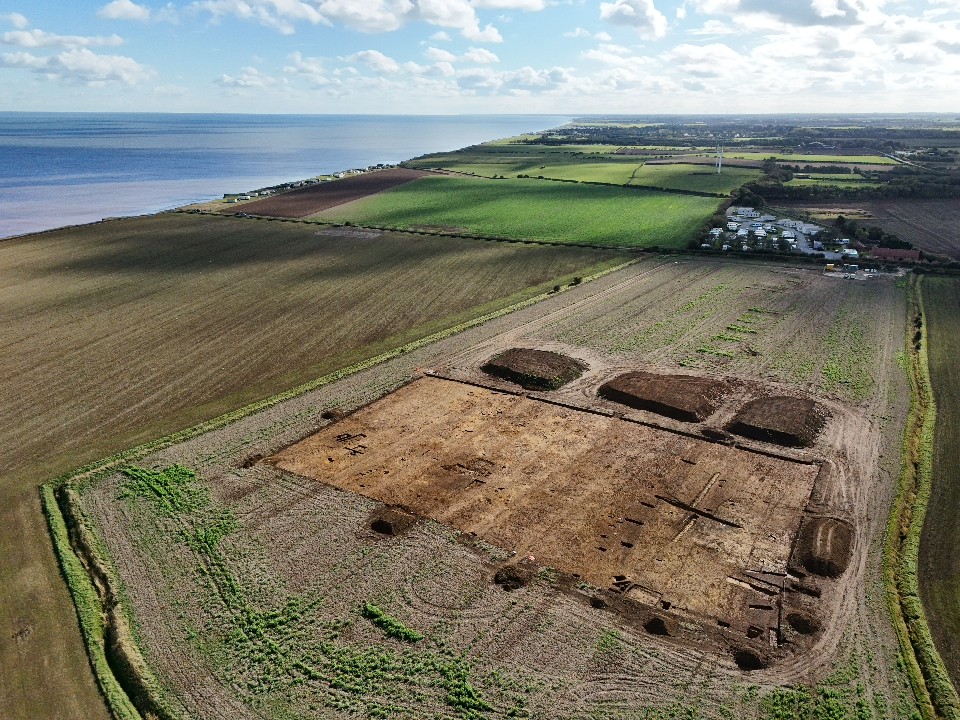
In August this year, we started work on a series of archaeological digs at the DBS projects’ landfall near Skipsea.
Known as ‘set piece excavations’, the work builds on the trial trenching work carried out earlier in the 2026 and further investigates areas of archaeological interest that have been identified.
The first of three large areas has been excavated covering 0.81 hectares, and forms part of an archaeological mitigation plan that must be completed before construction work can begin. During the trial trenching, several undated pits were found, and although they did not contain datable artefacts, several contained charred cereal grains that will have been waste products from cooking and indicate that the pits are of human origin.
In one of the trenches, deposits were also uncovered that suggest the location of a silted-up former pond. There is increasing evidence in the East Riding of Yorkshire of prehistoric activity near to these damp locations which might once have been good sources of fish, fowl, water and reeds.
The ongoing excavation work will investigate the area more fully to better understand the character of the activity taking place. So far, we have identified three large pond features and a multitude of small pits like those encountered during the trenching. This supports the theory that the landfall site contained several watery hollows during prehistory and that these became focal points for human activity. We hope to use scientific dating techniques to clarify the precise date. We have also encountered a large enclosure ditch which we suspect is Roman, although few datable artefacts have so far been recovered.
Image courtesy of AOC Archaeology