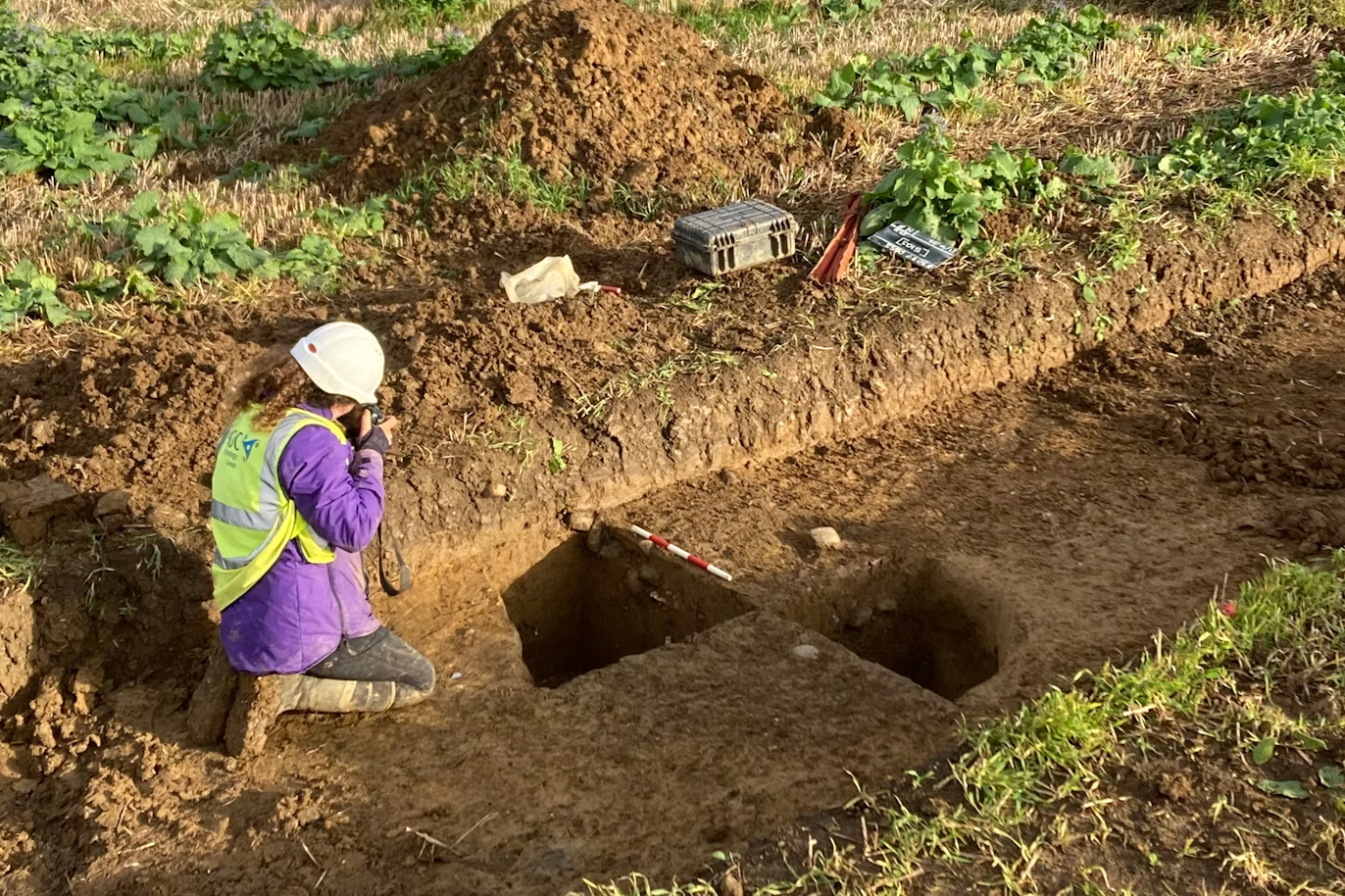
Recording a deep medieval pit at the suspected ‘Cleeton’ settlement site at the proposed landfall.
The most substantial medieval remains so far were recorded at Skipsea where a medieval settlement site spanning the 12th to 14th centuries AD was identified.
The time period and location suggest that the settlement could be Cleeton which was recorded in the Domesday Book but presumed lost to the sea due to coastal erosion.
The settlement consists of a nearly-rectangular boundary ditch enclosing a large area with internal boundaries and pits, post holes and ring ditches. Finds from the ditches include daub (indicating there were structures made from wattle and daub), domestic pottery, animal bone and burnt food waste.
Cleeton was thought to have been significant in the 12th to 13th centuries with people living at the site, cultivating crops (mostly wheat) and vegetables and butchering animals. Evidence suggests that the settlement declined after this period as the importance of Skipsea grew and became a focus. The area that was once Cleeton was used as farmland throughout the later medieval periods right up to the present day.
Arable farming was widespread in Holderness throughout the later medieval period, and ‘ridge and furrow’ remains from medieval ploughing were found extensively at the investigated areas.