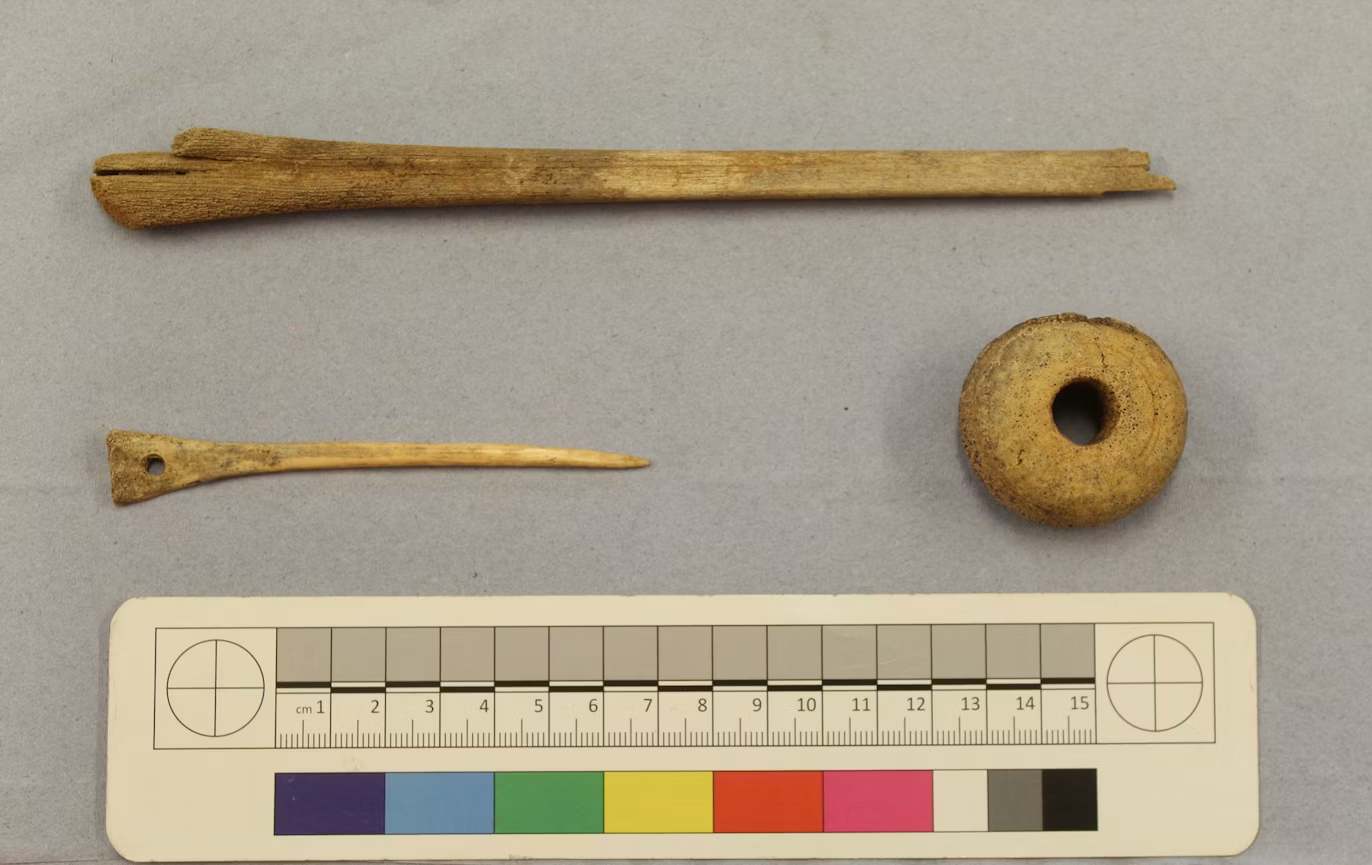
Iron Age/Roman worked bone finds from excavations near Catfoss including pins and a spindle whorl.
At the landfall area at Skipsea, evidence suggests that after the last Ice Age (about 10,000 years ago), the prehistoric landscape of Holderness was punctuated by small damp hollows and ponds, many of which served as focal points for human activity.
Small pits were discovered in the vicinity of the hollows and ponds, including a fire-pit containing burnt residues, and samples from some of the features were dated to the late Neolithic (3000-2500 BC) and the early/middle Bronze Age (2500-1100 BC). It is likely that humans were using the ponds at this time as sources of water and other resources, and as convenient locations to dispose of waste products.
Along the cable route, linear ditches and gullies were identified that are likely to be Iron Age (700 BC – 43 AD). These were probably field boundaries, similar to the hedges, drystone walls and fences we use today, marking out and draining plots of land for arable and pastoral farming. People living in the area used the ditches to dispose of domestic waste and many of those investigated contained broken pottery, animal bone (food waste) and fired clay.
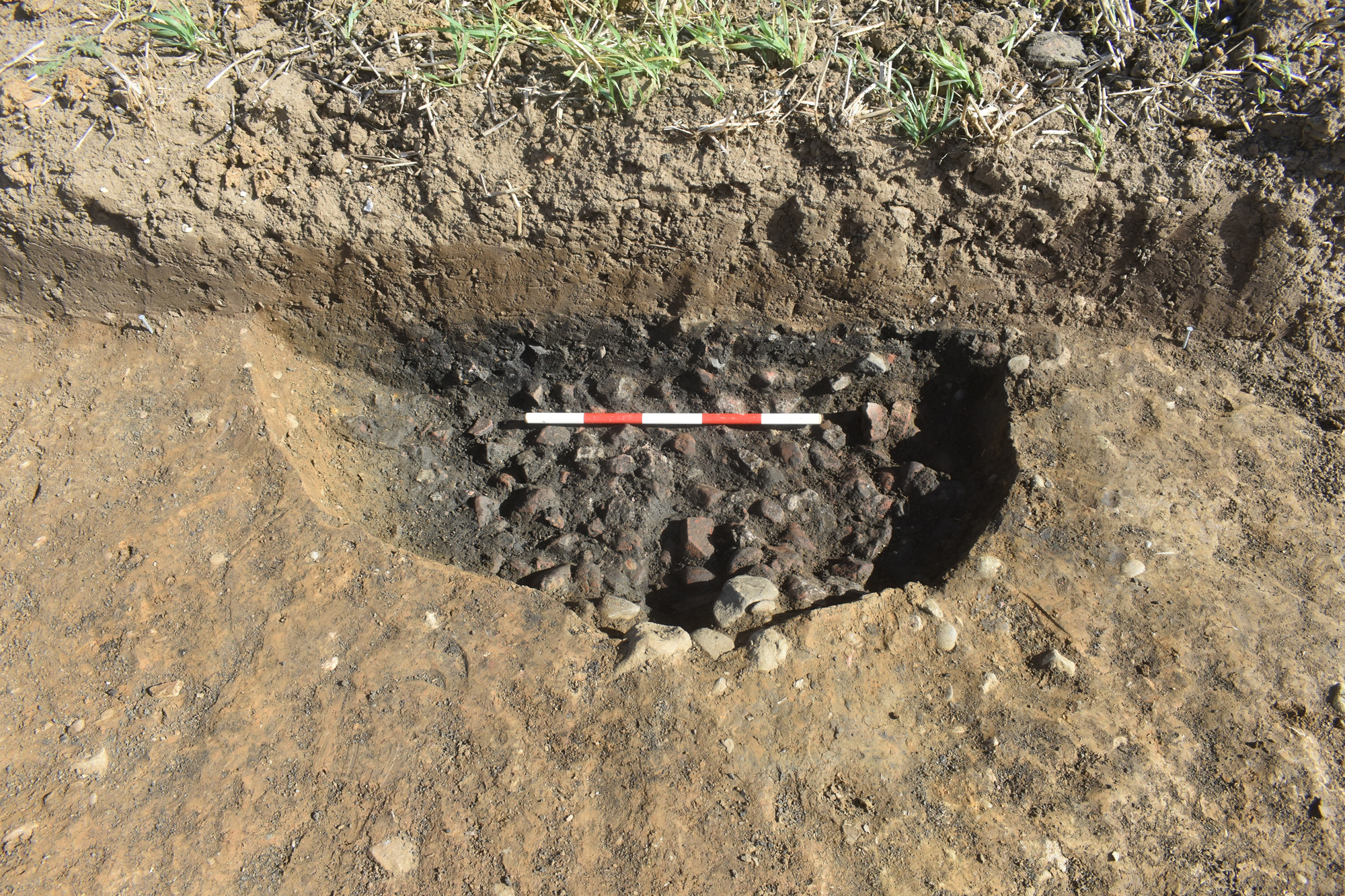
A Bronze Age fire pit at the proposed landfall site (Skipsea)