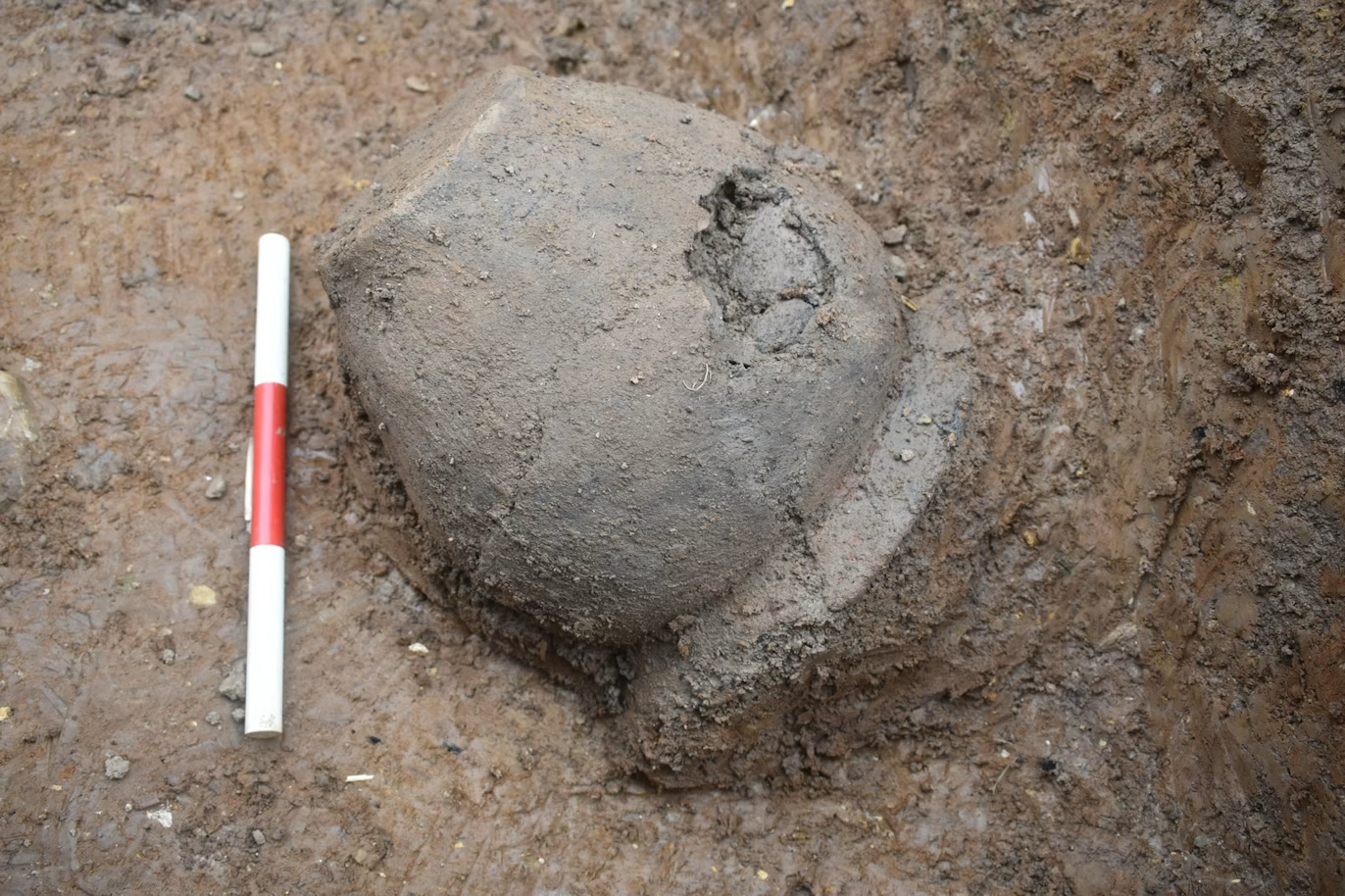
A whole pot discarded into a Roman ditch at the proposed landfall (Skipsea)
At the site of the proposed converter stations near Bentley, a well-preserved Roman trackway defined by two large parallel ditches, together with associated enclosures and pits were investigated.
The trackway likely enabled access to fields and supported communication between settlements. The ditches contained Roman pottery fragments from beakers, jars and bowls broadly dated to between 2nd and 4th century AD. They also contained bones from sheep, pigs, cattle and red deer plus residues from crops of wheat, spelt, oat and barley giving a fascinating insight into the lives and diet of rural Roman communities in East Yorkshire.
In the area of landfall at Skipsea, another Roman trackway was identified which produced over 700 pieces of pottery from its backfilled ditches, including a nearly-complete large jar. Nearby, at Catfoss investigations took place at a Roman settlement enclosure defined by ditches containing pottery and animal bone including a worked bone needle and spindle whorl used in textile production.
The finds from both these sites suggest a settlement would have been nearby.
Read the Autumn 2025 newsletter for an update on Romano-British finds near Routh and some aerial photos of the trial trenching.
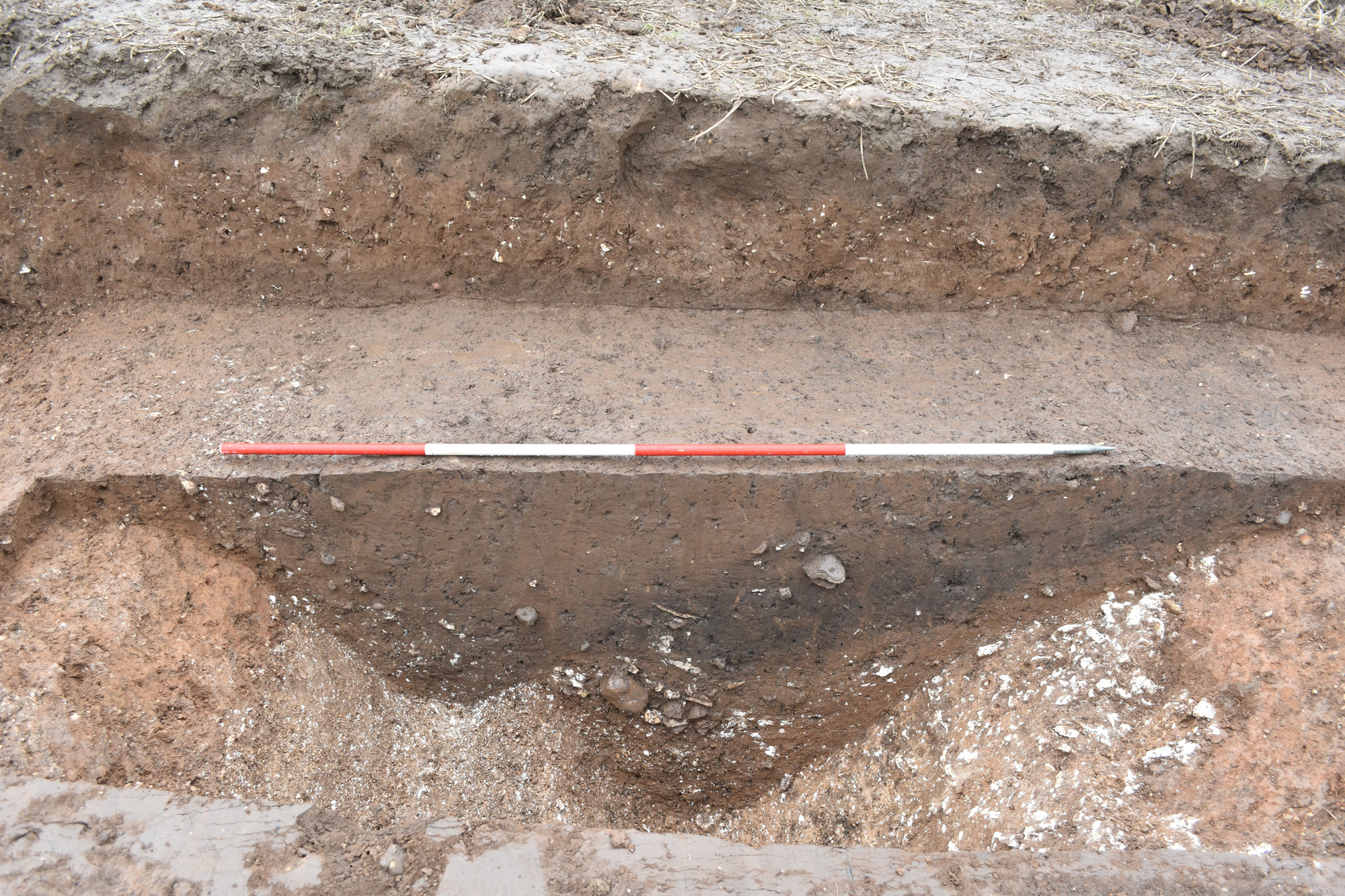
Large Roman trackway ditches at Bentley.